
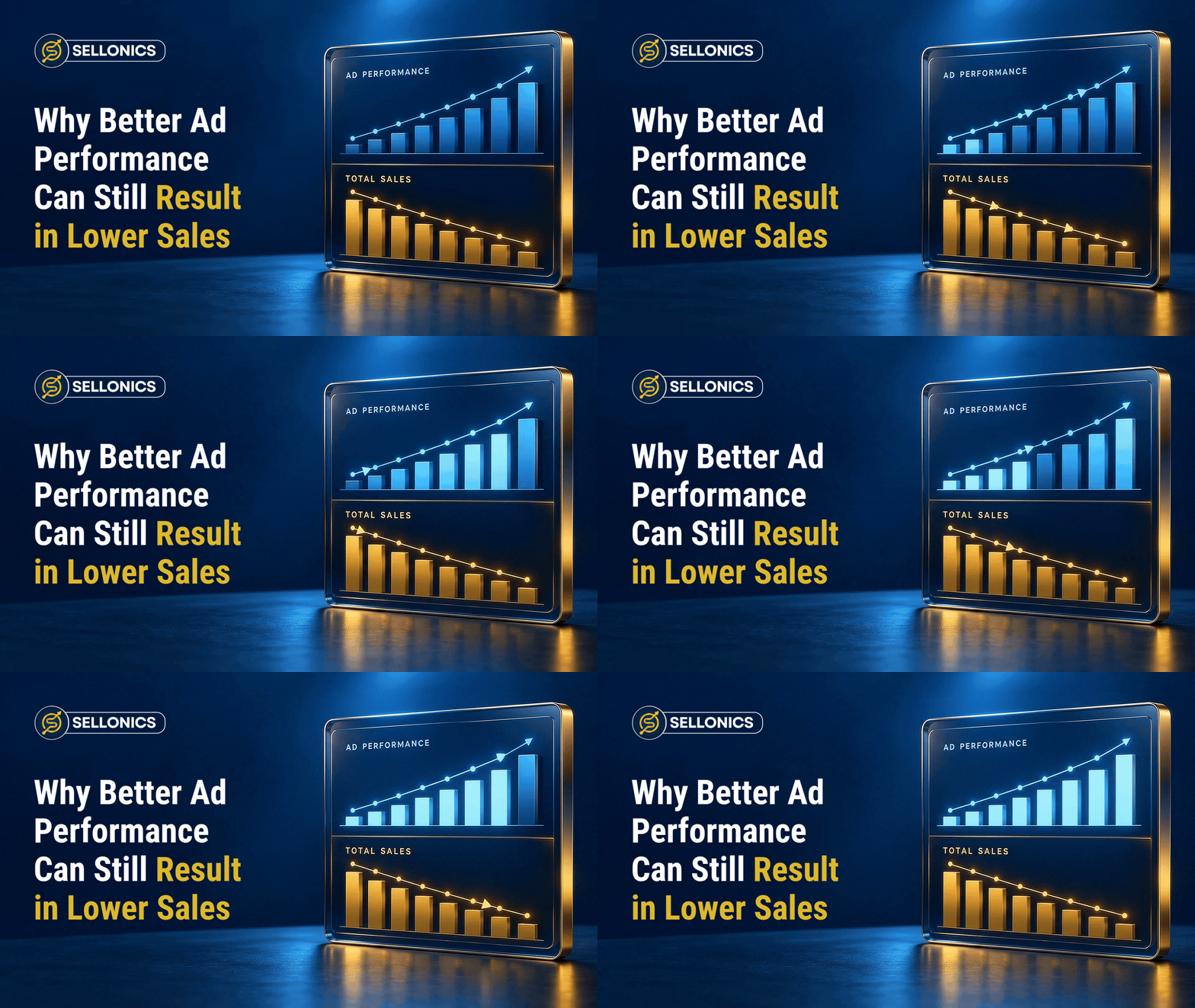

A metric can get better while your business gets worse. It sounds odd but we saw it happen in a real account. ACOS is improving but sales falling is more common than most sellers think.
This post explains what happened and how you can spot the same problem in your own ads.
What ACOS Actually Tells You
ACOS stands for Advertising Cost of Sales. It shows how much you spend on ads for every pound of sales those ads bring in.
If you spend £20 on ads and get £100 in sales your ACOS is 20%. A lower number usually means your ads work more efficiently. That is why sellers watch it so closely.
If you are new to the basics our Amazon PPC guide for beginners explains ad types and match types in simple steps.
Why ACOS Is a Ratio and Not a Total
ACOS compares two numbers. It does not show how big either number is. A ratio can look great when both numbers are shrinking.
The Account Where ACOS Improved and Sales Dropped
In this account ACOS got better month after month. On that one measure things looked fine.
At the same time total sales kept falling. Nobody noticed at first because the efficiency number kept moving the right way.
What Was Going Wrong Underneath
The account had a long list of negative keywords. These are search terms that stop an ad from showing. Over many months the list grew far too big.
Some of the blocked terms were real customer searches. Good buyers were no longer seeing the ads.
How Negative Keywords Can Block Real Buyers
Negative keywords are useful when they are used with care. Problems start when the list is never reviewed. Common causes include:
- A broad word added as a negative that also appears in good searches
- Terms blocked after only a few clicks with no sales
- Old terms that no longer match how shoppers search today
- Terms added in a hurry to bring ACOS down
How Fewer Impressions Changed the Ratio
Fewer people saw the ads. The smaller group that still saw them was more selective. Spending against sales looked better for that small group.
A better ratio on a shrinking pool of sales is not a healthier business. The business was just smaller.
A Simple Example of the Trap
The numbers below are made up to show the pattern. Watch what happens to ACOS and to ad sales.
| Month | Ad spend | Ad sales | ACOS |
|---|---|---|---|
| Month 1 | £2,000 | £8,000 | 25% |
| Month 2 | £1,500 | £7,000 | 21% |
| Month 3 | £1,000 | £5,500 | 18% |
| Month 4 | £700 | £4,200 | 17% |
ACOS fell from 25% to 17%. That looks like great progress. But ad sales dropped by almost half.
A seller who only watches ACOS would feel good. A seller who watches total sales would see a problem.
Why This Trap Is So Easy to Fall Into
There are a few reasons sellers miss it.
- A ratio moving the right way feels like good news. It is tempting to stop digging.
- Ratios can improve for reasons that have nothing to do with success. A smaller group of ads or a change in product mix can do it.
- Random monthly changes can also move ACOS. One good month does not prove a trend.
- Dashboards often show ACOS first. The number you see first gets the most attention.
The number that pays the bills is total sales. That is the one to check first every time.
ACOS, TACOS and Total Sales
No single number tells the full story. Use them together.
| Metric | What it shows | What it can miss |
|---|---|---|
| ACOS | Ad spend compared with ad sales | Whether total sales are growing or shrinking |
| TACOS | Ad spend compared with total sales | Problems inside the ad account itself |
| Total sales | The real health of the business | The reason behind a rise or a fall |
How to Check Your Ads the Right Way
You do not need a complex setup. Follow these steps each month.
- Start with total sales. Look at the trend over three to six months before any efficiency metric.
- Split ad sales and organic sales. Falling ad sales with steady organic sales tells a different story than both falling.
- Check impressions and clicks. If both drop fast your ads are reaching fewer buyers.
- Read TACOS next to ACOS. It shows how ads fit into the whole business.
- Audit your negative keyword list. Compare it with your search term report. Remove any term a real buyer might use.
Signs Your Ads May Be Blocking Real Buyers
- Impressions fall while bids and budgets stay the same
- The search term report shows fewer unique terms each month
- ACOS improves but orders decline
- Strong keywords stop getting traffic without a clear reason
If you see two or more of these it is time for a full review.
What We Did Differently
We stopped treating ACOS as the headline number. We looked at total sales and total revenue over time next to ACOS and not instead of it.
Then we found the real cause. It was the build-up of negative keywords. We removed the terms that were blocking real customers and kept the ones that truly wasted money.
After that both numbers moved the right way together. Sales recovered. ACOS stayed healthy because the ads were reaching real buyers again.
Keeping the Fix in Place
Good account care is regular. Review negative keywords on a set schedule. Add new ones only when the data shows a clear waste of spend. Check total sales before you celebrate any efficiency gain.
If you want a team to watch these numbers for you see our Amazon advertising management service.
Key Takeaway
Improving ACOS on its own tells you very little. ACOS improving but sales falling is a warning sign and not good news.
Always compare ACOS with the real sales trend. If one metric goes up while total sales go down trust the sales number because it shows what is happening to your business.
Book A Call

We manage Amazon complexity, so you can focus on scaling
Built for brands that want predictable Amazon performance without micromanaging every detail.
Real growth. Backed by real numbers.