

A good Amazon pricing strategy starts with your break-even ACoS, worked out on the price without VAT. Test one price at a time and judge each by profit per order, not ACoS alone. Adjust ad targets whenever a discount changes your margin.
How Price Affects Conversion on Amazon UK
Shoppers compare listings in seconds. Price sits right next to the star rating and the main image. A small gap in price can decide the click.
It works like “two similar tins on a supermarket shelf. The shopper picks one in a few seconds, and price is the first thing they read.” Your listing gets the same quick glance.
What Your Price Tells Shoppers
- A price far below rivals can suggest poor quality
- A price far above rivals needs strong reviews and clear proof of value
- A price in line with rivals puts the focus on your images, title and rating
- A sudden jump above recent prices can hurt trust
Price and the Featured Offer
The Featured Offer is the offer shown with the Add to Cart button. Amazon says pricing at or below the lowest major outside retailer improves your chances of winning it. Faster delivery, healthy stock and good account health help too.
How Price Changes Your ACoS
Price touches ACoS in two ways. It changes how many clicks turn into orders. It also changes how much each order is worth.
- Ad cost per order equals cost per click divided by conversion rate
- ACoS equals ad cost per order divided by the price
A higher price can lower conversion and still give a healthy ACoS if the order is worth more. A lower price can lift conversion and still cut your margin to nothing.
How to Find Your Break-Even ACoS
Break-even ACoS is the highest ACoS you can run before an ad sale loses money. Use this formula.
Break-even ACoS = profit before ads divided by price excluding VAT
Use the price without VAT. Amazon Ads reports attributed sales without VAT. If you use the VAT-inclusive price, you will overstate what your product can afford to pay per click.
Many sellers also forget that “ACoS with no margin behind it is like a speedometer with no speed limit sign. The number tells you how fast you are going, not whether you are breaking the law.” Break-even ACoS is the speed limit.
Three Prices, Three Outcomes
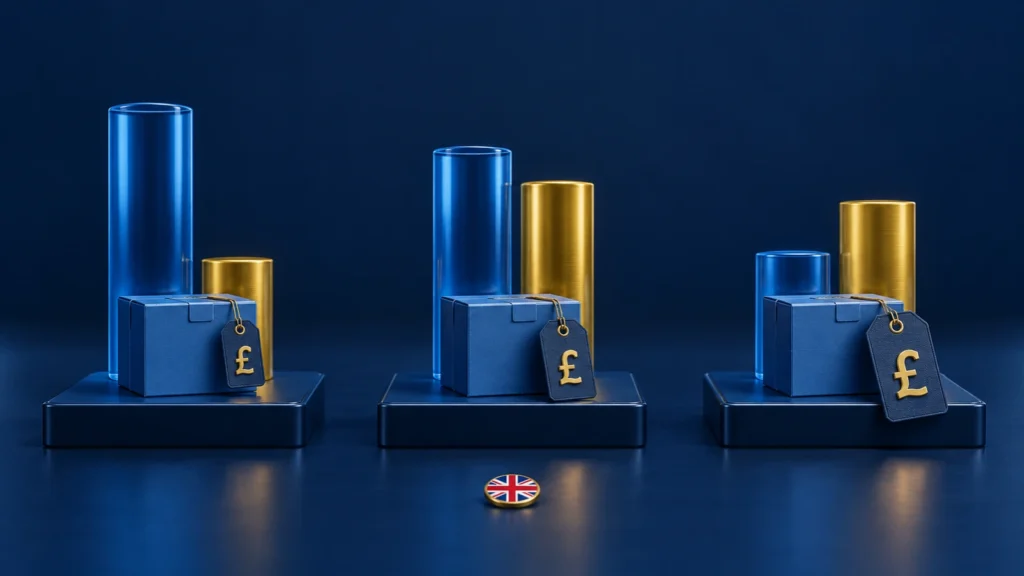
Take a product that costs £15 per unit once you add product cost, Amazon fees and fulfilment. Assume a £0.80 cost per click. Assume conversion falls as price rises.
| £27 on Amazon | £30 on Amazon | £33 on Amazon | |
|---|---|---|---|
| Price excluding VAT | £22.50 | £25.00 | £27.50 |
| Profit before ads | £7.50 | £10.00 | £12.50 |
| Break-even ACoS | 33% | 40% | 45% |
| Assumed conversion | 12% | 10% | 8% |
| Ad cost per order | £6.67 | £8.00 | £10.00 |
| Actual ACoS | 30% | 32% | 36% |
| Profit per sale after ads | £0.83 | £2.00 | £2.50 |
| Profit per 100 clicks | £10 | £20 | £20 |

What the Example Shows
- The £27 price has the best ACoS and the weakest profit per sale
- The £33 price has the worst ACoS but earns as much per 100 clicks as £30
- A lower ACoS does not always mean more profit
- A lower price can still win if it lifts organic rank and sales volume over time
If your ACoS looks better but sales keep falling, read our post on why ad performance can improve while sales drop.
How to Choose Your Price in 5 Steps
- Add up every cost per unit. Include product cost, Amazon fees, fulfilment and returns.
- Find your break-even ACoS. Use the price without VAT.
- Map your rivals. Note their prices, ratings and review counts. Price against products of similar quality.
- Test one price at a time. Amazon suggests selling at two competitive prices for a set period and comparing results. Give each at least two to four weeks.
- Judge by profit, not ACoS alone. Check profit per order, total sales and TACoS together.
How Discounts, Coupons and Deals Affect Your ACoS
Every discount cuts your profit before ads. That lowers your break-even ACoS on the same day. Adjust your ad targets when you run an offer.
| Tool | Good for | Watch out for |
|---|---|---|
| Coupons | Lifting click-to-order rate on a specific product | Margin drops on every coupon sale |
| Deals and promotions | Peak events such as Black Friday and Prime Day | Click costs often rise at the same time |
| Lightning Deals (4 to 12 hours) | Fast visibility for new or slow products | Short window, so stock and budget must be ready |
| Lower launch price | Getting first sales and reviews | Set an end date so the low price does not stick |
Sellerboard’s 2026 benchmarks expect click costs to rise by 20% to 30% in the fourth quarter. This is a vendor estimate, not Amazon data. Still, it is a reason to plan peak prices and budgets in advance.
If you manage ads in house, our guide on the hidden costs of manual Amazon PPC management shows how pricing and ads can drift out of step.
Pricing Mistakes That Hurt Profit
- Cutting price to fix poor conversion when the real issue is images or reviews
- Using the VAT-inclusive price in ACoS calculations
- Keeping the same ad target when a promotion cuts your margin
- Changing price and ads on the same day, so nothing can be learned
- Chasing the lowest ACoS instead of the best profit per order
Not sure where your price and ad costs stand? Sellonics offers a free Amazon audit that shows where spend is being lost.
Frequently Asked Questions
Does a lower price always improve conversion?
No. A lower price can lift conversion, but it also cuts margin. If the product has weak images or reviews, a lower price may not fix the problem.
What is a good ACoS for my product?
It depends on your break-even ACoS. Your target should sit below it. Some 2026 benchmark reports put typical account ACoS in the 30s, but that tells you little about your own margin.
Should I price below my competitors?
Not by default. Price against products of similar quality and review strength. Being the cheapest can start a price war and lower your break-even ACoS.
Should I include VAT when I calculate ACoS?
No. Use the price without VAT for ACoS and break-even checks. Amazon Ads reports attributed sales without VAT, so this keeps your numbers consistent.
How often should I change my price?
Review it regularly, but change one thing at a time. Give each test two to four weeks. Check again before peak events and when costs change.
Book A Call


We manage Amazon complexity, so you can focus on scaling
Built for brands that want predictable Amazon performance without micromanaging every detail.
Real growth. Backed by real numbers.