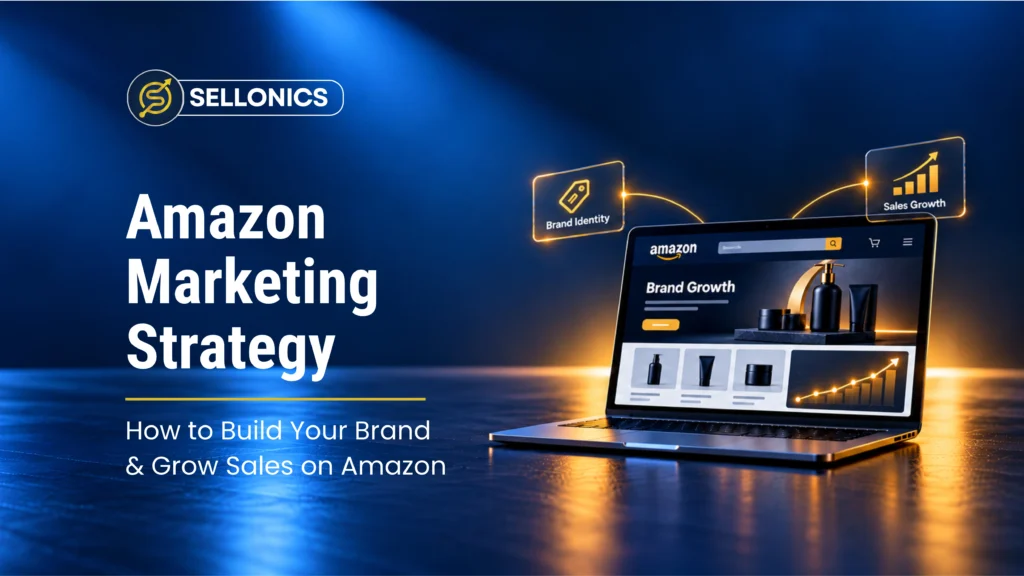

An effective Amazon marketing strategy starts with brand protection and a compelling product listing. Targeted ads attract the right shoppers, while performance data helps identify areas for improvement. Build each layer step by step, measure the results, and scale what works.
What a Strong Strategy Includes
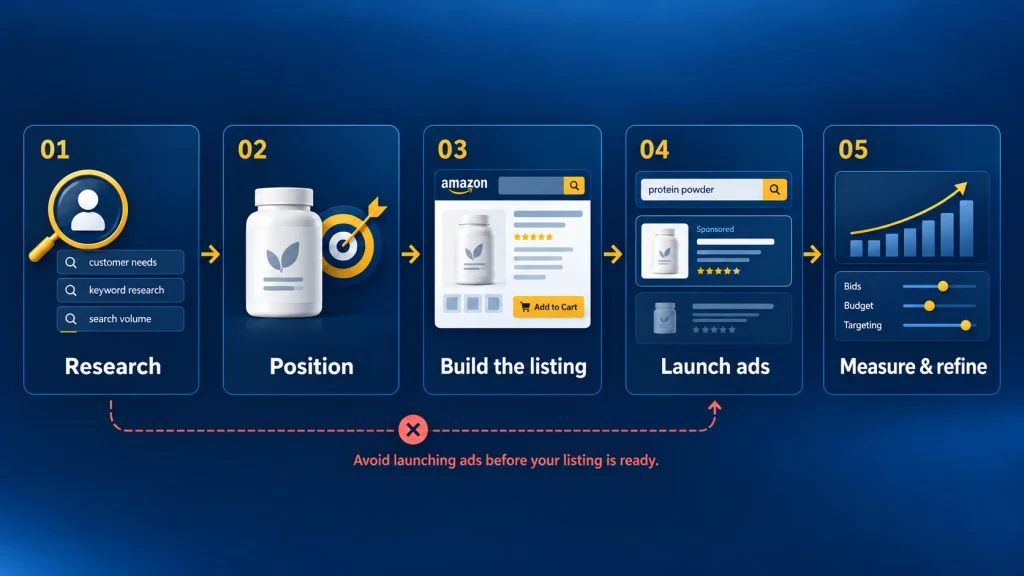
A strategy is a set of choices made in order. You pick who you sell to. You protect your brand. You make the page convincing. Then you pay for traffic and measure the result.
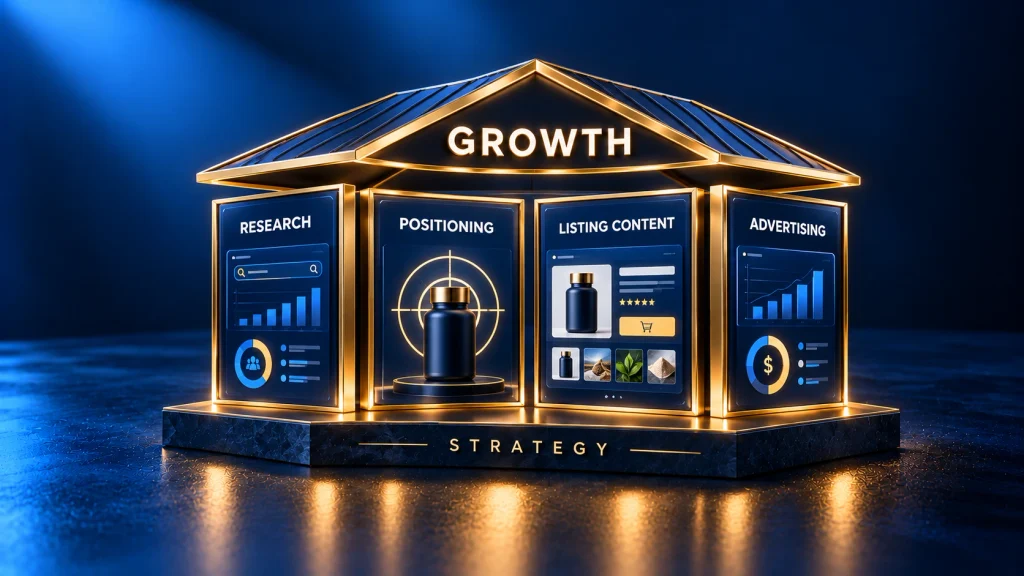
Skipping the order is like “building the roof of a house before the walls are up. It looks like progress until the first storm.” Ads sent to a weak page waste money, however well they are set up.
| Layer | Overview | Main goal |
|---|---|---|
| Brand | Brand Registry, trademark, Brand Store, brand voice | Own and protect your name |
| Listing | Title, images, bullets, A+ Content, video | Turn visitors into buyers |
| Advertising | Sponsored Products, Sponsored Brands, Sponsored Display | Bring in the right traffic |
| Customers | Reviews, service, repeat buyers | Build trust and loyalty |
| Measurement | Brand Analytics, ad reports, TACoS | Show what to do next |
Step 1: Build and Protect Your Brand
Start with Amazon Brand Registry. It gives you access to A+ Content, a Brand Store, Sponsored Brands and brand tools. Amazon says you need a brand name or logo and a trademark to enrol.
If you do not have a trademark yet, Amazon’s IP Accelerator program can help. Register your trademark in each country where you sell. For Amazon.co.uk that means the UK.
Why This Comes First
- You control the listing and can report copycats
- You can add richer content to product pages
- You get access to brand level data and ad formats
- Rivals and resellers find it harder to hijack your pages
Step 2: Make Your Listings Do the Selling
Shoppers decide in seconds. Your main image and first words of the title carry the most weight.
Amazon says A+ Content can lift sales by an average of 8% through repeat purchases. Treat that as a guide not a promise. It does show that the page matters after the click.
A Simple Listing Checklist
- Use a clear main image on a white background.
- Lead the title with the brand and the main keyword.
- Write bullets around buyer benefits, not just features.
- Add A+ Content, comparison charts and a short video.
- Keep the message the same across the page, ads and Brand Store.
Step 3: Use Amazon Ads to Bring the Right Traffic
Ads speed up what a good listing already does. Each format has a different job.
| Ad type | Best for |
|---|---|
| Sponsored Products | Reaching shoppers ready to buy |
| Sponsored Brands | Showing your logo, range and Store |
| Sponsored Display | Following shoppers who looked but did not buy |
Good structure matters as much as budget. Keep discovery campaigns apart from proven keywords. Block terms that never sell. Our post on how negative keywords can quietly block sales shows where this goes wrong.
Track TACoS as well as ACoS. TACoS compares ad spend with total sales, so it shows whether ads are building the brand or only buying sales.
Step 4: Build Trust and Repeat Buyers
Reviews, answers to questions and clear service all affect conversion. Amazon points brands to tools such as Vine and the Customer Reviews tool to gather honest feedback.
Repeat buyers lower your cost of growth. Use Brand Stores, bundles and consistent packaging to give customers a reason to return.
Step 5: Measure, Test and Adjust
- Use Brand Analytics to see search and purchase trends. It is free to enrolled brands
- Use Manage Your Experiments to test titles, images and A+ Content at no extra cost
- Use Amazon Attribution to see how off-Amazon traffic, such as email or social, leads to sales. Check that it is open to your account
- Review new-to-brand customers and placement reports on Sponsored Brands
Change one thing at a time. Give each test two to four weeks before you judge it.
Is Sellonics the Right Fit for Your Brand?
Ask yourself three questions before you reach out.
- Are you spending around £10,000 a month or more on Amazon ads?
- Is your brand registered and your listing in good shape?
- Do you want to keep ownership of your account and data?
If the answer is yes to all three, start with a free Amazon audit. It shows where spend is being lost.
Common Strategy Mistakes to Avoid
- Running ads before the listing and reviews are ready
- Copying the top seller instead of choosing a clear angle
- Judging success on ACoS alone
- Changing many things at once, so nothing can be learned
- Planning peak season budgets in November instead of early September
Think of your strategy as “a relay race. Brand, listing and ads each pass the baton. One dropped a baton and the whole team slows down.” Check each handover before you add more budget.
Frequently Asked Questions
What does a good marketing plan for Amazon include?
It is a plan that joins your brand, listings, ads and customer feedback. Each part supports the others so sales grow in a steady and measurable way.
Do I need a Brand Registry to grow on Amazon?
You can sell without it. It does give you A+ Content, a Brand Store, Sponsored Brands and stronger protection for your listings. Most growing brands enrol early.
How much should I spend on Amazon ads?
It depends on margins, competition and goals. Start with a budget that lets each product gather data. Then raise it on campaigns that pay back.
How long until a new strategy shows results?
Ad changes can show in a few weeks. Listing and brand work often take 60 to 90 days to show in sales and rankings.
When should I hire a UK Amazon agency?
Consider it when ad spend is high enough that wasted clicks cost real money. Sellonics suggests £10,000 or more a month. Below that, a consultant or careful in-house work may give better value.
Book A Call


We manage Amazon complexity, so you can focus on scaling
Built for brands that want predictable Amazon performance without micromanaging every detail.
Real growth. Backed by real numbers.